THE PASSING PARADE


“The Passing Parade”


By


Gerry Niskern


I confess. I’m a confirmed people watcher. When I was a kid, taking in the bustle of downtown Phoenix on Saturday night with my parents was cheap entertainment. Dad would say, “Let’s go downtown and Watch the Passing Parade.”

So now, of course, our large valley malls are good for more than shopping; they are great for watching that “Passing Parade”. While sitting in a food court one Saturday, I enjoyed the wonderful variety of people who walked by.  I was seated behind the clown lady dressed in bright polka dots and red and white stripped stockings. She was coyly tossing her red yarn tresses, laughing at the security guard’s banter. She wasn’t selling many balloons, but hey, the security guy was already sold. Children in strollers reached their hands in anticipation of a balloon, but those with grandparents were the ones who usually received one.

The teenagers were in the majority, strolling in groups of three or four.  There were lots of both slim and chubby bare midriffs over low rider jeans on the girls. The boys wore cargo pants and lots of extra long shorts with tee shirts.  If they sported baseball caps, about half were bill forward and half bill back. The guys had hair short on the sides and the girls had long locks hanging forward, on one side.

Occasionally the tinkling of bells drew my attention to some Asian teens passing by.  Both boys and girls wore loose, yellow satin pants with lots of red fringe and dozens of tiny bells sewn all over them.

I will admit I was taken back by the guy with the girl on a leash fastened to a collar. Later on, I saw a boy with a collar on being led by a girl. It kind of makes those friendship rings that our parents objected to seem pretty tame.

You could spot the snowbirds in their shorts and sleeveless shirts on this fall day. It’s amazing how different people perceive the weather. There were lots of spaghetti straps, but just as many long sleeves on others.

The couples pushing elaborate strollers were often carrying the baby; his ride was piled with purchases. If the baby was actually in the stroller, regardless of blankets, there was at least one bare foot sticking out.  Every team in the NBA, MLB and the NFL were thoroughly represented in the attire of the little boys.

I will confess the moms-to-be with the glaringly bare, expectant tummy, joining in the latest trend is a little hard to take. I want to offer them something to cover the poor, little offspring-to-be.

Blue jeans are indeed the universal uniform. Everyone, Senior girlfriends buying movie tickets, Native Americans with their hair in traditional knots in the back and even wheel chair shoppers were denim clad.

Every so often a youth sports team passed by. No precious time to waste changing after the game; gotta head straight to the mall. Kudos to the dad I saw with three girls from a soccer team. He opened his billfold and gave them their allowance. They all synchronized their watches and went their separate ways to shop, including dad. I think it probably cuts down on the temptations when they know he is somewhere in the mall shopping too. Maybe dad was just concerned about the guys with the dog collars.

When I left, the security guard was back, hitting on the balloon girl again. The least the guy could do was buy one of her balloons.

“Hug, Anyone?”


“Hug, Anyone?”


By


Gerry Niskern


Is it just me, or has anyone else been wondering about all the hugging going on these days? It has definitely evolved into a form of greeting and goodbyes too. And don’t even get me started on all the politicians hugging everyone on the podium before a speech.

One evening a couple of years ago, I was sounding off, as I’m prone to do occasionally, about all the social hugging; and I’m afraid I hurt a good friend’s feelings. He was a dedicated hugger. When I got my foot out of my mouth I tried to explain that I didn’t mean among family and old friends. You see, our friendship dates way back to grade school here in Phoenix. The sandy haired kid that I remember was the class cut-up. I’m indebted to him for providing many a laugh on long boring afternoons at Adams School.

I learned a little about the modern hug after consulting Miss Manners. She tells us that the hug has become a new form of social inter-action. However, she does not approve of acquaintances trying to skip the preliminaries of becoming close friends before starting the hugging. So, when did all this hugging start?

I grew up in an era when men shook hands and women hugged a little, sometimes. Parents hugged their children and maybe an aunt or uncle slipped in a hug or two, but not often. I confess I was born with that anti-hugging gene. My mother loved to tell how I, as the first baby around in years, would deftly dodge the out stretched arms of loving relatives as I made my independent way around the house.

When I worked at the Valley National Bank the vice-president demanded a hug and kiss from each girl as he passed around our checks. Suffice to say that he learned quickly to just give me my check on payday; no preliminaries.

Actually, today hugging is considered very important and one of the most pressing needs of elders for social interaction. A group at the Carnegie Mellon University in Pittsburg has developed a product called The Hug. The Hug uses an anthropormorphic form and behavior to impart a sense of presence. It is soft and organic and fits the human body comfortably, suggesting that when activated and communication is established it should be held in the arms.

Its main function is person-to-person communication using wireless telephony and pressure sensors. A hug network is set up with the use of a standard memory card. Once the connection is established, senders can squeeze, stroke, hug or pet The Hug, sending sensors to the recipient at the other end.

I’ve learned a lot about hugging and, also thinking before I speak. My strong  objection to the “social” hug is that it devalues the age-old meaning of the hug. The little social half-hearted hugs that I see as people part seem contrived and uncomfortable.

I don’t know if my old friend from childhood ever forgave me for voicing my displeasure of too much insincere hugging, but I know one thing. If he were here today, I would sure give him a great big hug!!

THE GAMES OF LIFE


By


Gerry Niskern

.           I played my first board game, Monopoly, when I was about eight. I loved it!  I used to set my little thimble (why I always chose the thimble I don’t know) at the starting point and vowed to end up with all the property and money too. I admit it, I do like to win. I guess that trait runs in the family, because one of my grandsons used to last in a Monopoly game only until someone else landed on Boardwalk and he didn’t have a chance to buy it. The board would soar into the air and the all the hotels and little houses took flight as he stomped from the room.

Of course, we played board games with our kids when they were little and then the weekend sleepovers of the grandkids were two day game marathons.

In the mean time, we were getting together often with other couples and playing Trivia Pursuit, Taboo, 25 Words of Less, Pictionary, Telestrations, Catch Phrase, and the list goes on and on. We had one friend in  particular that loved to win so much that if we were trying a new game and she or her team didn’t win, she refused to play that game again.

Games at family gatherings three or four times a year were fun, but not often enough. Then sadly, we lost old friends the game players, one by one, but Ken and I still played Scrabble and Quiddler together and then he was gone.

My good neighbor and two grandkids played Trivia Crack on my phone with me for a while, but life was pretty desolate.

Then someone told me about the Meetup groups that played board games. I signed up and played games with friendly players and then later played Trivia with another group of great people.

Last week I was allowed to join an established group playing Trivia at Aunt Chiladas. They were very welcoming and lots of fun. And best of all, I was able to supply a couple of correct answers! With more games in my life again, the game of life is better.

“What? Flooding in Phoenix?


“What? Flooding in Phoenix?”


By


Gerry Niskern


A map of possible flooding in the Valley of the Sun was published in the Arizona Republic and shown on local television a few weeks ago. It was suggested that this was a possibility if one of the dams should break.

As hard as it is for residents now to fathom, Phoenix has had more than its share of floods.  The valley has always had years of hard drought and then years of unbelievable rains. The thunderstorms that sometimes come tearing through the valley create havoc, but most of the time these torrential rains just managed to give everyone’s grass a good soaking. I know it’s hard to believe it, but sometimes we actually do get too much precipitation here in Phoenix.

Tremendous damage was caused by a rainy spell in February, 1890.  The Salt River, the Gila, the Santa Cruz and even the Colorado burst their banks and spread out over farms and homes along their courses. The Salt rose nearly seventeen feet above normal and washed out the Tempe railroad bridge and many miles of Southern pacific track between Tempe and Maricopa, and between Maricopa and Yuma.

Most of the homes in the lower area in Phoenix were under water. Adobe houses melted like candy. People were mired and stranded all over the territory. Cattle and other livestock were caught and swept away and ranchers and farmers had much of their tillable land gouged out and carried off.

The territory soon recovered from this blow. Bridges, ditches, railroad grades, and homes were rebuilt. No weather bureau records were kept at that time, so the amount of the three day rain was not exactly known.

Arizona’s wet and dry seasons have always been erratic, but seldom has one extremely wet year been followed by another. But that’s exactly what happened.

Going back in history, 1891 was actually the year known as the year of the great flood.

The life and well being of Phoenix depended on a plentiful supply of water from the Salt River.

Water from the river was basic to the development of the Valley of the Sun. Although sometimes the rain was inadequate, but mostly sufficient, it occasionally and unfortunately, sometimes it became torrential.

On February 18, l891, rapid snow melt in the mountains and several days of heavy rain produced a terrible flood in Phoenix. Water reached parts of Washington Street by the end of the day. More than sixty families had their swept away. Mostly adobe, they crumbled from the force of the rampaging water. Phoenix rescue workers plucked individuals from treetops and carried them to higher ground.

Fortunately, back in 1870, an early resident and the first mayor of Phoenix, John T. Alsap, had suggested a safe site for the permanent townsite of Phoenix. Located on high ground, more than a mile north of the Salt River, the site, bounded within the rectangle of Van buren on the north, Harrison on the south, and Seventh Street and Seventh Avenue was approved.

The Salt River spread out two or three miles wide below Phoenix.The rise of the Salt River surpassed that of 1890 by a foot or more, at point reaching 18 feet above normal. The Tempe railroad bridge and miles of track again went out. Telephone and telegraph lines were out leaving Phoenix without outside communication.

It melted down a lot of newly constructed adobe homes. Livestock was swept away and crops were torn out again. Again entire families sat sodden and wet in trees waiting to be rescued.

The floodwaters finally began to recede seven days later, on February 24th. It left behind a quagmire of mud and debris. This injected new energy into the local business community to support the need for a controlled water supply to overcome periodic floods and droughts.

Unfortunately, after the flood, few real estate developers wanted to create residential areas in the southern part of the city. Most wanted to live north of Washington on higher ground and away from potential flood damage. Poorer neighborhoods grew up in south Phoenix, along with railroads, factories, warehouses and stockyards.

In more recent times during my childhood in the early l940’s, in one of those summers when we thought we were forever doomed to dust storms, but no wet relief, the rain finally came. We kids celebrated as we always did. We put on our bathing suits and ran joyfully through it. Hey, there were very few private pools in those days and not many public either. We’d take the water any way we could get it!

But the rains didn’t stop. The parched ground couldn’t hold it. The earthen Cave Creek Dam finally gave way and a wall of water hit Phoenix. The raised railroad tracks along Nineteenth Avenue dammed the water. That caused the entire residential area of  stately old homes around the State Capitol Building to endure heavy flooding.

We kids, in the blissful ignorance of childhood, enjoyed riding our bikes through the knee high water flowing curb to curb in the streets. West Jefferson street with it’s high curbs was especially deep. Our dads would follow along in the wake behind the  Estes buses in order to make it to work.

Most of the businesses, including the capitol building, were sandbagged. The capitol basement still flooded.

Since this was during WWII, there were always many army vehicles in the city. We kids were treated to our first look at an U. S. Army amphibious vehicle.  The Seventeenth Avenue underpass, about three blocks south of Washington, was flooded. Cars could not get through. Inconvenient detours around were time consuming, especially during gas rationing. One afternoon, we kids watch in awe as a group of soldier’s came down the street and drove right through the deep water and on under the bridge!

Even with the dams constructed along the Salt, there continued to be occasional floods in Phoenix. I remember listening as a neighbor told my parents about a flood in l938. “Back in thirty-eight the river really overflowed it ‘s banks. The Central Avenue Bridge was holding the water and debris back. Even though it was located on higher ground, all of central Phoenix was in danger of being flooded. Everyone went down to watch because the authorities were going to dynamite the bridge. Just as they were ready to light the fuse, the water started to subside.”

One other summer, in the l970’s, we lived just north of Northern off fifteenth Avenue. The rains had again been unrelenting. The ground was saturated and the canals couldn’t handle all the runoff and were starting to overflow. One Saturday morning we were awakened as police cars drove through the neighborhood. They were shouting on loud speakers, “Attention, prepare to evacuate.” It was kind of scary; what to take and where to go?

Fortunately, again the rain stopped and the canal waters started to subside.

Could it happen again in our valley, who knows?
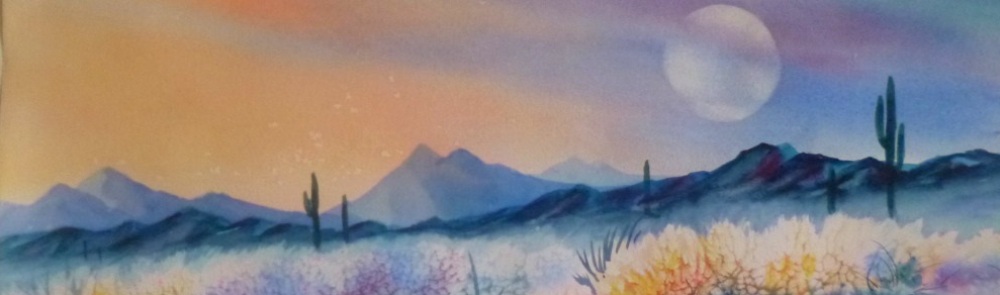
“LABOR DAY RIVER CRUISE”


Labor day River Cruise

By

Gerry Niskern

Is your family looking for a way to celebrate Labor Day?   May I suggest a river cruise like our family used to take in Arizona?

Unlike the mandatory fashionable wardrobe for an ocean trip, let me describe our attire for a river cruise.  I don’t know what you call a river in your part of the country, but ours were not always deep and swift through the desert country.  All we needed was a bathing suit, a pair of cut off jeans; (to keep your backside protected from submerged logs and sharp rocks.) Everyone wore some old tennies and a hat.

We took our cruises on the Salt and Verde rivers here in Arizona. Grandma’s Romel style straw hat had a bill. She wore it like the general when she directed the launching of our summer river cruises. Grandpa couldn’t swim so he didn’t join our floating party. He trucked the inner tubes to the river and met us down stream at the end of the day.

In the middle of August, it wasn’t necessary to be a good swimmer, just a strong walker. You were always glad you had your tennies on when you had to swing your leg down inside the tube and push off against the rocks if you were grounded. In no time at all, you would be bobbing along with the current.

Our kids, along with their cousins, wiggled into their tubes, clomped down the muddy bank and with a whoop and a holler, were on their way.  They delighted in the heady freedom of being allowed to go on ahead of the grown-ups.

The water was pure and cold. It felt like melted snow against our hot skin as we floated away, one by one.

We cruised the low, clear river over water sculptured rocks in ever changing moods and colors. As the desert glided by, we passed mesquite, palo verde and an occasional stand of giant cottonwoods, their green and yellow foliage hanging over deep green pools.

Invariably, as we floated by, we were ambushed by a band of river pirates dropping from the branches above. Waves swamped our river craft and grinning kids who looked very familiar popped to the surface.   Sooner or later, one of the river pirates asked grandma for a safety pin to hold up his bathing suit; or another needed a Band-Aid. Grandma provided the items without fail from her waterproof plastic purse. You name it, she had it.


We floated on past little hidden pockets of lush vegetation. Blue herons swooped above the trees and settled on their skinny legs in the shallow water. Meanwhile, the strong, sentinel mountains held the brooding July thunderheads at bay.

Later, we sailed into a deep, green pool. Shouts and splashes echoed from the nearby cliffs as older kids cannonballed off huge rocks. Tiny rainbows arched through the sprays of wate

In late afternoon, we rounded a bend and saw the orange sunset reflecting off grandpa’s glasses as he stood waiting at our rendezvous point. The river moved swiftly there, so the men hauled themselves out of their tubes and waded us in.

Soon the smell of hot dogs sizzling from supple sticks filled the air. Damp towels hung like limp capes from kids’ shoulders while we listened to the ripple of the river, chirps of crickets and an occasional owl.

The moon rose cool and bright. Reluctantly, we packed up to go home. We knew we would be back to celebrate another Labor Day on the river that enticed us again and again.

So, have you been on a water journeys lately? How soon can you pull your wardrobe together for a Labor Day River cruise?

“NOTHING FAIR ABOUT STATUES”


“NOTHING FAIR ABOUT STATUES”


By


Gerry Niskern


A wise author once said, “You can only write about war by writing one soldier’s story.” I’d like to go back in Arizona history and tell you about two Arizona war heroes. Lt. Frank Luke Jr. and Sgt. Sylvestre  Herrera,  who  both received the Congressional Medal of Honor. Luke’s was awarded posthumously after WWI and Hererra, during WWII, was the first living Arizona Congressional Medal of Honor recipient.

When I was a young girl, my friends and I used to wait for the streetcar in front of the State Capitol. While we waited we gazed up at a statue of the handsome Frank Luke Jr.  and fantasized about the history of the young flying Ace. Frank was looking upward into the sky, his flying cap and goggles in hand.

Surprisingly, I was not taught in school about Luke’s heroic skills as a “balloon buster” during WWI. He flew his planes thru such punishing enemy fire that five were written off after his missions.During two weeks in September, l918, in only ten missions, he destroyed fourteen heavily defended German surveillance balloons and four airplanes.  He was only twenty years old when he gave his life in an air battle near the village of Murvaux, France.

I finally learned more about Lieutenant Frank’s life from the fascinating and factually correct book, “Terror of the Autumn Skies” by Blaine Pardoe.

Different vivid memories of Silvestre Herrera take me back to Union Station on 4th Ave in downtown Phoenix in August, l945 during WWII. One evening when I was a little girl my parents took me to see a brave young hero’s return home. When the train stopped the crowd surged forward and many hands plucked him from his wheelchair. I was distressed to see that he had no legs as he was passed from shoulder to shoulder of the cheering crowd. Finally Sgt. Hererra was placed on the back of a red convertible for a parade up Washington.

History tells us that when his platoon was pinned down by Germans in a forest near Metzwiller, France, he charged the enemy and captured 8 enemy soldiers. That same day, to draw enemy fire away from his comrades, Hererra entered a mine field and in two explosions lost both legs. He continued to fire upon the enemy which allowed his platoon to skirt the field and capture the enemy position.

Both young men came from completely different backgrounds. Frank was one of nine children from a prominent Arizona family. The statue of Luke is in front of the Arizona State Capitol on l7th Ave, facing down Washington.

Sylvestre was an orphan, born in Mexico, and raised by an Uncle in Glendale.  He was 27, married with three children when he volunteered and answered this country’s call. You won’t find a statue at the capitol erected in his honor.

THE THINGS THEY CARRY


THE THINGS THEY CARRY


By


Gerry Niskern


One of the characteristics that my mother loved when we moved to Arizona when I was a kid was the openness and lack of prejudice. We had moved here from a small town in the East and she loved the fact that no one cared if you were Italian, German, Austrian, Polish, Russian, or whatever. That had not been the case when she was growing up. She especially liked the idea that her girls were going to go to school in a state where most families were newcomers. No one carried  “home grown” bigotry to school.


I went to school with Mexican and Asian kids at Jackson and Adams Middle School. I graduated from Phoenix Union in l950 and there were many Mexican and Asian students graduating too. Daisy Yee was the Valedictorian of our class. Yes, the African American kids went to Carver but that changed the following year and the schools became desegregated.


I went to work at the Valley National Bank, which later became Chase. I worked along side Mexican and Asian girls in the Installment Loan Dept. We ran around together shopping on our lunch hour. One of the Mexican girls, Amelia, took part in my wedding.


Our ideas from home carried us thru school and on into adult life. Sure, some of our parents were liberal Democrats and others were conservative Republicans, but that didn’t define our lives. We were there to learn from past history and prepare for the future.


The kids in Arizona went back to school this month. Almost all wore new backpacks to carry their tons of books. But, think about this: they carried something else. They carried a heavy load of  political rhetoric that  they were saturated with from TV and the Internet. Even the Kindergarteners could probably tell you if their mommy and daddy was  Republican or a Democrat and the “state of our union” right now!


Think about it.

The School Bus: “ROLLIN’ ON”


“Rolling On”

by

Gerry Niskern


I wrote this little story as related to me by my younger brother-in-law. He started driving after he retired from the Centura Rocket Company, Colorado,  where he was a designer.


Keith crushed the pink slip of paper in his fist as he strode from the office. His heart was pounding. The numbers on the driver’s lockers were a blur. He yanked  the metal door open and started throwing his personal things into a box.

“What kind of a joke is that? Saying I can’t drive my bus anymore. I don’t care what their new rules say about age limits; after years of hauling kids!”

He sat down abruptly and took a few deep breaths. He remembered his blood pressure and told himself to calm down.

“You have the blood pressure under control and passed the physical one more year, don’t blow it now.”

After a few minutes, he picked up his compass  and studied it. He chuckled as he remembered the first morning he drove the huge yellow vehicle. “Man, was I nervous…afraid I’d forget the route, get myself lost, or leave some kid stranded. I was scared that I couldn’t make friends with the children. He tossed the compass into the box and pulled out a sweat stained cap. “I remember I was drenched in nervous sweat when I finally stopped for that last pickup that day.”

A little girl was clinging to her mother when he pulled up. The first grader climbed the high steps, one at a time, sniffling and blinking back the tears. She said something to him; he couldn’t hear her at first. He leaned down to hear her timid voice. “Hi, Bus.”All the first day’s tension disappeared with his laughter.

He pulled his gloves from the locker shelf and thought back to the first winter of driving…November, December when the snow came. He used to stand on the bumper in the pre dawn darkness scraping thick frost from the windshield as icicles formed on his mustache.

He  prayed on those icy mornings as he made his way slowly from one huddled group to another, white curls of breath disappearing above their heads as they scrambled aboard.

He learned how to spot the troublemakers fast. When he wrote up a student and they lost their riding privileges for a week, he knew which driver of the nearest route to notify, so the culprit couldn’t sneak on with another crowd.

Keith chuckled when he thought how he had gotten so he could predict the day, usually at the end of the first week, when five or six kids would jump out the back emergency exit. He would be standing there ready to herd them back on the bus.

Sure, times had changed a lot over the years. Kids had changed. First, the district  installed the surveillance cameras, then came the CB radio. “Code Red” to the office meant he was pulling off the road, doors locked, send the police. He sighed, tossing his first aid kit into the box. There was one time he wasn’t likely to forget.

One day he wrote up an eight year old boy, an automatic “no ride” for a week. The next morning, at the boy’s stop, a massive body hurled through the bus door towards him. Hands of steel dragged him down to the ground. A large woman pounded him while small feet kicked him in the head.

Keith drove the next day , taped ribs and all. The vice of fear gripping his stomach didn’t show as he joked  with the kids at the young kickers stop.

So it went…Now he had reached “that age” and been relegated to a van, a mini van at that! He’d be picking up pre-schoolers for a special education program. Forget it…not for him. He made a vow  to himself, “I’ll stay  one week, one week only, until they find a replacement. Not a minute longer.”

On Monday morning, Keith reluctantly pulled the yellow mini van out of the district yard. He was glad the other drivers had already gone. It was down right embarrassing. Six seats. Six pitiful seats! No way, thank you very much.

Later that morning, he eased the van to the curb on the last stop. A little girl slowly climbed aboard. Her chin trembled and he saw eyes bright  with unshed tears. She waved a brave good bye to her mother. Then as she turned toward him, she placed a small trembling hand on his arm and said softly, “Hi, bus.”

NOSTALGIA IS NOT FOR SISSIES!


“Nostalgia is not for Sissies”


By


Gerry Niskern


Have you heard about the trend in home building in the valley?  Perhaps you have read about the new “old” planned neighborhoods? Lately the developers have been touting the idea of communities with houses varying in size from 5,000 to 1,500 sq. feet. This will encourage people of all ages to live side by side. They describe wide sidewalks and narrow, traffic free streets. The homes will have porches close to the sidewalk and garages in the back of the property. No block walls, just fences low enough visit over. It’s even been suggested that gates could left be open so that school children could cut across yards on the way to and from school.

Clothes will be permitted to hang out on clotheslines. Small dwellings are optional on the rear of your property for mothers-in-law, or home businesses. People from all walks of life could live together in a wonderful network of human relationships.

I have just one question for you potential homebuyers who are standing in line and drawing for lots, “Are you out of your mind?” Better yet, have you read the fine print in your contract? What if you get all moved in and find out that you actually are expected to live the life style of the good old days?

Come to think of it, fair is fair. If you want to return to the charm of the 40’s and 50’s those clothes lines could be filled with cloth diapers, washed daily. You would use a  hose for hot water to fill the washing machine; then the diapers are rung through the wringer and rinsed in two tubs of clean water then through the wringer again, before hanging.

The problem is, while the laundry is being done, the little ones are not eating their Cheerios in front of the television watching a video.  Sorry, no TVs. When you do check to see what they’ve been up to, there are no spray cleaners or even paper towels to wipe up their spills.

Those breakfast dishes are washed in the sink, not popped onto the dishwasher. In your quest for authenticity in this return to yesteryear, none of those plastic baby bottles and disposable liners allowed. And when you take him out on that nice wide sidewalk for his daily dose of vitamin D, you will use a heavy metal stroller with tiny wheels that pushes like an army tank. Sorry, no lightweight jogging strollers with big wheels.

Of course, when the retiree calls about the tomatoes Junior has been sampling from his garden while cutting across yards to school, don’t despair. I’m sure all those friendly relationships you have been cultivating will pay off. Also, with the gates left open, what happens to all the doggies?   Before moving in, I’d suggest neutering.

As for those small dwellings on the back of your property, you might be able to get your mother-in-law to move in. That is, if you can catch her. Most of the mother-in-laws I know are too smart to fall for that arrangement.

Neighbors using the small houses for a home business or studio can be tricky. Sculpture welding involves bright flashes of light and woodworking tools can be very noisy in the late evening hours.

When you are sitting out on the old style porch waiting for hubby to come home, no fair having a ceiling fan or mister system on the porch they weren’t invented yet! And of course, you won’t be calling him on a cell phone to pick up some fast food for dinner. He’ll have enough trouble trying to navigate the narrow, old-fashioned streets in his big SUV.

HOW DO WE KNOW IT’S ALMOST AUGUST?


“How Do We Know It’s Almost August?”


By


Gerry Niskern


August is a special time of year in Phoenix and the Valley of the Sun. How do we know it,s almost  August? Forget the calendar. There are all kinds of tell tale signs that this unique month has almost arrived.

You know that brown spot in the yard? The one that you’ve been trying to green up all summer with extra hand watering; you realize you just don’t look that direction anymore. And those geraniums in the pots under the shade tree, dead.

The dog hides when he sees you with the leash in your hand. He’s not about to go for a walk on that hot pavement. And the weeds along side the streets are high enough to hide in. You’re not startled anymore when you see wading pools and patio umbrellas become airborne and blow past the window.

You know it’s August when the water in the swimming pool is unbearably warm. I’ve actually heard one fellow complaining that he was sweating while doing laps! And you can’t invite company over for dinner, because it’s too hot to barbecue outside and you’re sure not about to cook a real meal inside!

When I was growing up here in Phoenix, we knew it was August when we had grown tired of playing in the revolving lawn sprinklers and I’d read every new book in the children’s section of the Carnegie Library on W. Washington. August was when the sudden rainstorms in the middle of the night sent our neighbors scurrying from their sleeping cots in the back yard. The lightening flashes illuminated nightshirts flapping in the wind as they hurried in the back door before the rain hit.

You knew it was August when you woke up on a Saturday morning to the delicious smell of fresh Aspen cooler pads as the refreshing breeze wafted through the house. No one left their evaporative coolers on at night; we didn’t need to. Dad always changed pads in August after we had gone through a few dust storms. That was back when dust storms were called plain old “dust storms” before they were known as “Haboobs.”

When my kids were growing up I knew it was August when the cool beach vacation had faded from memory and unrest was breaking out because brothers and sisters were getting tired of each other. When their blond friend’s hair was turning green from all the chlorine in the pool. I knew it was August when their bathing suits were getting too small and were so faded you couldn’t see the color anymore. Their flip-flops were so stretched out all they did was flop.

I knew it was time to return the overdue library books; but I really knew it was August when my number two son who refused to give up short sleeves in the fall and long sleeves in the spring, finally started wearing short sleeves!


Now, the majestic storm clouds gather every afternoon. Then one evening in August, there is a spectacular sunset, and another and another every day.

Soon you won’t be able to  find that annoying brown patch in the lawn anymore, and the water in the pool will be refreshing again. The noise you hear are the school buses rumbling down the street, on practice runs, another sign that fall is indeed around the corner.